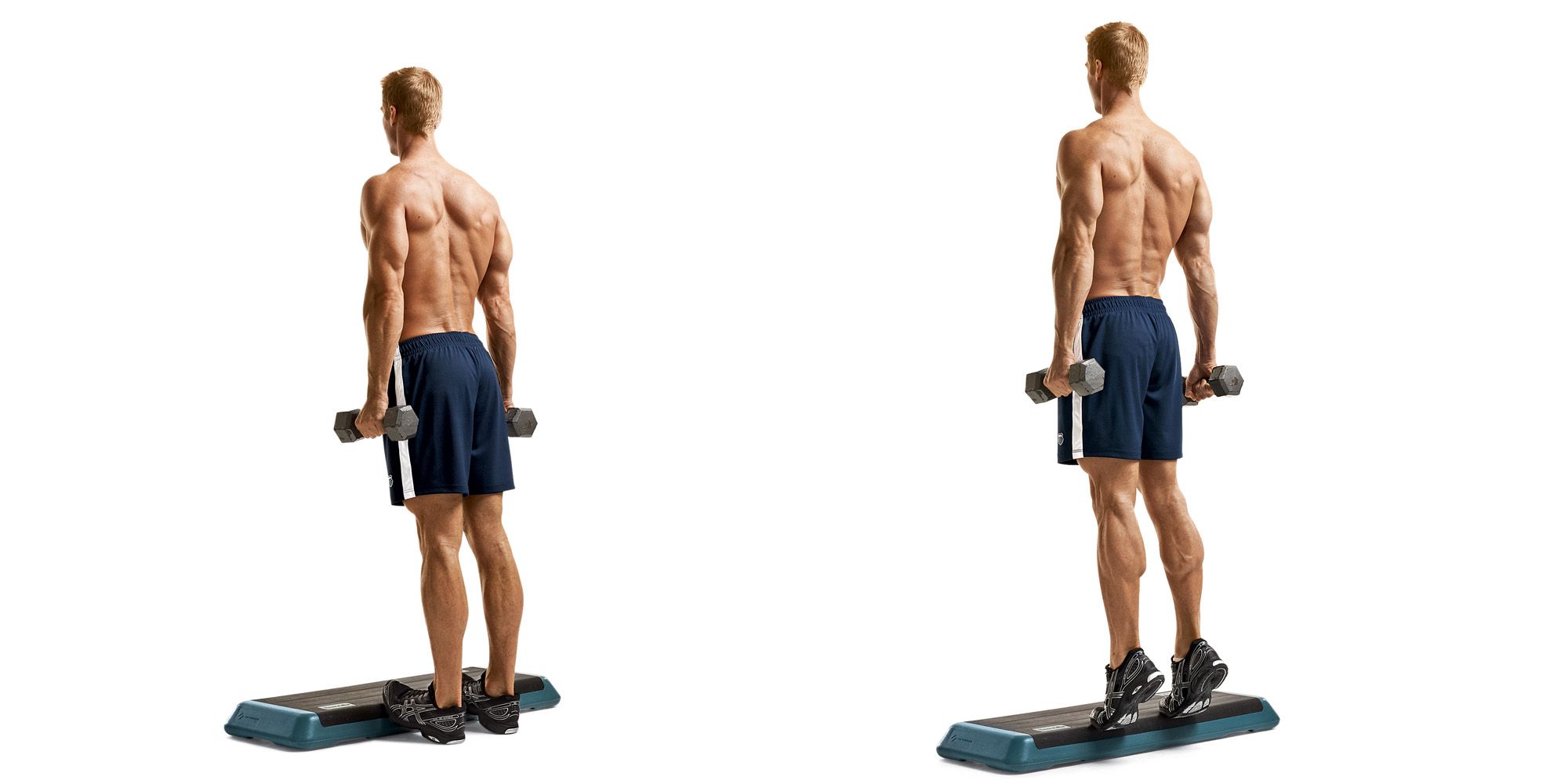
Calf Raises: How to Actually Build Your Calves When Nothing Else Has Worked
Calves are the most commonly undertrained and most complained-about muscle group in recreational lifting. Everyone has a training partner whose calves grew from walking to the gym and another whose calves remain stubbornly small despite years of dedicated calf work. Genetics play a real role here, specifically the muscle belly length and tendon insertion point that are determined at birth and cannot be changed. But within your genetic ceiling, there is almost always more room for calf development than most people have achieved, and the reason is almost always that they have been training them wrong.
This guide covers the anatomy behind calf training, why most approaches fail, the specific variables that produce calf growth when adjusted correctly, and how to structure a calf training program that actually moves the needle.
Calf Anatomy: Two Muscles, Two Requirements
The calf complex is dominated by two muscles: the gastrocnemius and the soleus. Understanding that these two muscles have different fiber compositions and different biomechanical positions is the key to training calves effectively, because most people train only one of them adequately.
The gastrocnemius is the larger, more visible calf muscle with two heads that create the characteristic diamond shape. It crosses both the knee and the ankle, which means it is most active when the knee is extended (straight). The gastrocnemius has a higher proportion of fast-twitch muscle fibers and responds better to heavier loads and lower rep ranges. Research indexed on PubMed confirms that the gastrocnemius has a fiber type ratio closer to 50-50 fast and slow twitch, unlike the almost entirely slow-twitch soleus.
The soleus sits beneath the gastrocnemius and is the deeper, flatter calf muscle. Because it only crosses the ankle and not the knee, it is most active when the knee is bent. The soleus is composed of approximately 70 to 80 percent slow-twitch fibers and responds best to higher rep ranges and more time under tension. Most calf training programs do all their work with the knee straight, which means they train the gastrocnemius adequately and the soleus almost not at all.
Why Most Calf Training Fails
The most common mistakes in calf training are using too-short a range of motion, bouncing at the bottom, training only with the knee straight, not using sufficient frequency, and dismissing calves as genetically fixed and therefore not worth serious effort. These factors combine to produce the situation most people are in: years of calf work with minimal visible change.
Partial range of motion is the single biggest technical error. Most people perform calf raises by coming up onto their toes but only dropping the heel to floor level at the bottom, which is not a full stretch. A full range of motion requires the heel to drop below the level of the foot platform on every rep, creating a loaded stretch at the bottom of the movement. This stretched position is where a significant portion of the hypertrophic stimulus comes from, and cutting it short removes the most productive part of the rep.
The Variables That Actually Drive Calf Growth
Full Range of Motion
Stand on a step, plate, or elevated surface that allows your heel to drop below foot level at the bottom of each rep. Lower slowly under control until you feel a full stretch in the calf, pause for one second at the bottom, then drive up through the full contraction at the top. The pause at the bottom is critical because it eliminates the elastic energy bounce that allows the Achilles tendon to do the work rather than the muscle. Every rep should be muscularly driven from a dead stop at the bottom.
Sufficient Volume and Frequency
Calves are highly resistant to fatigue due to their high slow-twitch fiber content and their role in supporting every step you take throughout the day. This means they require higher training volume than most other muscle groups to achieve meaningful overload. Research supports a range of 15 to 30 sets per week for calves as an effective volume range for hypertrophy in trained individuals. Spreading this across three to four sessions per week produces better results than cramming it into one or two sessions.
Training Both Heads
Alternate between straight-leg calf raises (knee extended, which targets the gastrocnemius) and bent-knee calf raises (knee bent at roughly 90 degrees, which shifts the load to the soleus). Seated calf raises on a machine are the most practical way to train the soleus because the seated position keeps the knee bent throughout the movement. Including both straight-leg standing raises and seated raises in every calf session ensures both muscles receive adequate stimulus.
Progressive Overload
Calves respond to progressive overload the same way every other muscle does. The body adapts to a given training stimulus and stops growing in response to it if that stimulus does not increase over time. Track the weight and reps you use on calf exercises and focus on making measurable progress over months. Most people perform calf raises with token resistance that would embarrass them if applied to any other exercise, then wonder why their calves do not grow.
Effective Calf Exercises
Standing Calf Raise
The standing calf raise is the primary gastrocnemius exercise. Use a calf raise machine, a Smith machine, or a barbell across the upper back standing on a raised platform. The load must be heavy enough to make 8 to 15 reps challenging after a controlled pause at the bottom of each rep. Toes can be pointed straight, slightly out, or slightly in to shift emphasis across the medial and lateral heads, but the functional difference between foot positions is modest.
Seated Calf Raise
The seated calf raise is the primary soleus exercise. Most commercial gyms have a dedicated seated calf raise machine. Position the pad across the lower thighs just above the knee and perform the same full-range, pause-at-bottom technique described above. Without a machine, a loaded barbell placed across the thighs while seated on a bench works equally well. Train the seated calf raise with higher reps (15 to 25) than standing raises, given the soleus’s higher slow-twitch fiber composition.
Single-Leg Calf Raise
Single-leg calf raises allow you to use bodyweight as a meaningful training stimulus and expose and correct any side-to-side strength asymmetry. They also allow a greater range of motion than machine work for some people. Start with sets of 15 to 20 per side and add load via a dumbbell held in the hand on the working-leg side once bodyweight becomes insufficient to provide overload. Pair calf work with the full lower-body support kit: the knee sleeves and ankle straps that keep every part of your lower-body training productive.
Programming Calves Effectively
A practical calf training structure that drives results: Train calves three to four times per week. Each session includes two to three sets of standing calf raises (8 to 15 reps) and two to three sets of seated calf raises (15 to 25 reps). Total weekly volume targets 18 to 24 sets across those sessions. Add weight when you can complete the top of the rep range with good form on all sets. Expect meaningful progress over six to twelve months of consistent training rather than weeks.
Calves can be trained at the end of leg sessions, on upper body days as a time-efficient add-on, or on dedicated days. Their recovery time is shorter than most large muscle groups, which makes three to four times per week training sustainable. The combination of sufficient frequency, full range of motion, adequate volume, and progressive overload over months will produce calf development that has eluded most people who have been training them incorrectly for years.
FINAL WORDS
Calf training fails most often because of partial range of motion, insufficient volume, training only the gastrocnemius while neglecting the soleus, and poor progressive overload tracking. Fix those variables with the approach described here and commit to consistent training over months. Within your genetic ceiling, your calves can grow substantially more than they have. The tools are straightforward. The requirement is consistent, correct execution over enough time for the adaptation to accumulate.
Certified strength and conditioning specialists with over 10 years of combined experience in powerlifting, nutrition coaching, and evidence-based fitness content. Based in New York City, the Genghis Fitness team tests every protocol in the gym before writing about it.