Full Finger Exercise Gloves: Who Actually Needs Them and What to Look For
Full finger exercise gloves cover the entire hand including all four fingers and the thumb, unlike fingerless gym gloves which leave the top two finger joints exposed. They are a more protective option for specific training contexts, less popular than fingerless gloves for general gym use, and frequently misunderstood in terms of when they are genuinely useful versus when they add bulk and reduce grip feel without providing real benefit.
This guide covers the specific scenarios where full finger coverage is worth the trade-off, what to look for in construction quality, and how they compare to alternatives like lifting straps and gymnastics grips for the tasks where hand protection is the main goal.
The Core Trade-Off of Full Finger Gloves
Full finger coverage provides better protection against cold, abrasion from rough equipment surfaces, and the sustained friction of rope climbing and outdoor training. The cost is reduced tactile feedback and grip feel. When your fingertips are covered, you lose the direct skin-on-bar contact that tells you exactly how the bar is sitting in your hand, whether your grip is shifting, and how much friction is available before you need to adjust.
For barbell work, this trade-off is generally not worth accepting. The tactile feedback from bare hands or fingerless gloves matters for technique and safety on heavy lifts. For other training contexts where the primary concern is protection rather than maximum performance, full finger gloves become more appropriate.
When Full Finger Gloves Make Sense
Cold Weather and Outdoor Training
Outdoor training in cold conditions is the clearest use case for full finger exercise gloves. Pull-up bars, monkey bars, and outdoor fitness equipment become painfully cold in winter, and maintaining adequate grip and hand function requires keeping the fingers warm. A lightweight full finger glove in a grippy material allows outdoor athletes to train on cold equipment without the hand fatigue and numbness that bare-hand cold-weather training causes.
Look for gloves with a silicone grip pattern on the palm and fingers rather than smooth fabric, which provides poor friction on metal bars in cold conditions. Thin insulation or a thermal lining extends the useful temperature range without adding too much bulk.
Rope Climbing
Rope climbing creates significant friction across the full inner hand including the fingers. Standard palm-only gloves leave the fingers exposed to the rope burn that comes from the sliding contact on the way down or during high-volume climbing sets. Full finger gloves designed for rope climbing or outdoor work provide the coverage needed to handle rope contact without skin damage.
Boot Camp and Military-Style Training
High-volume calisthenic training on rough equipment, wooden obstacles, and outdoor surfaces creates abrasion damage that accumulates quickly on uncovered fingers. Full finger gloves are standard in military fitness training and tactical fitness programs for exactly this reason. The coverage extends training duration before skin becomes the limiting factor.
General Fitness and Rehab Contexts
Athletes returning from hand or finger injuries sometimes use full finger gloves during the transition back to training to protect healing tissue from direct equipment contact. The glove provides a physical barrier while the skin and connective tissue complete their recovery. This is a transitional application rather than a permanent training choice.
When Full Finger Gloves Are Not the Right Tool
For standard barbell training, full finger gloves are not appropriate. Heavy squats, deadlifts, presses, and rows require the tactile feedback that comes from direct hand-to-bar contact or minimal coverage. A full finger glove on a 400-pound deadlift introduces material between the hand and the bar that can shift, bunch, and reduce the proprioceptive information you depend on to maintain grip security through the pull.
For high-rep pull-up bar work including CrossFit-style kipping, gymnastics grips with a dowel are the more purpose-built option. The dowel grip is specifically engineered to protect the palm during rotational friction and provides better targeted protection than a full finger glove for that specific application.
For grip security on heavy pulling exercises, the Genghis Fitness lifting straps and figure-8 lifting straps are purpose-built tools that solve the problem far more effectively than any glove.
What to Look for in Full Finger Exercise Gloves
Material at the Palm and Fingers
The palm and finger contact surfaces should be leather, suede, or silicone-reinforced synthetic rather than plain fabric. Fabric palm surfaces compress and slide under load, providing less friction than bare skin on a metal bar. Leather and suede maintain grip properties under sweat and chalk. Silicone grip patterns on synthetic gloves provide good friction in cold and wet conditions.
Finger Flexibility
Full finger gloves that are too stiff make it difficult to close the hand fully around a bar, reducing grip strength directly. The finger sections should flex freely enough that you can make a tight fist without the glove resisting the closure. Pre-curved finger construction helps by aligning the glove’s natural shape with the hand’s closed position.
Wrist Support
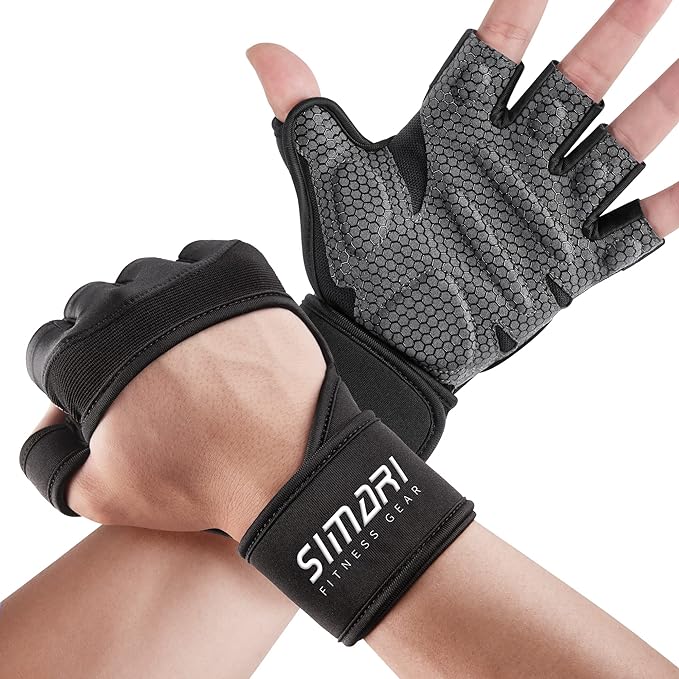
Many full finger exercise gloves include a wrist wrap extension that provides some wrist stabilization in addition to hand coverage. For training contexts where wrist support is also useful, this is a convenient combination. For pure hand protection applications, a minimal wrist closure that keeps the glove positioned correctly is sufficient.
For serious wrist support during barbell pressing, the Genghis Fitness wrist wraps are purpose-built for that application and provide meaningfully more wrist stabilization than the integrated wrist section of most gloves.
Durability at the Finger Seams
The seams at the tips of the fingers and along the finger lengths are the first points to fail in full finger gloves under training use. Look for reinforced seam construction at the fingertips, where repeated flexion concentrates stress. A glove with good palm construction but weak finger seams will fail quickly under consistent training loads.
Sizing Full Finger Exercise Gloves
Measure the circumference of your hand at the widest point across the knuckles, then the length of your hand from the base of the palm to the tip of the middle finger. Most manufacturers publish a two-measurement sizing chart. When between sizes, size up for gloves used in cold conditions where a thin liner underneath is beneficial, and size down for bare-hand gloves where a snug fit preserves tactile feedback.
Alternatives Worth Considering First
Before buying full finger exercise gloves for gym use, consider whether the specific problem you are trying to solve is better addressed by a more targeted tool.
- Skin tears during pull-up bar work: gymnastics grips with a dowel are more effective than full finger gloves
- Grip failure during heavy deadlifts: lifting straps solve this problem. A glove does not.
- Wrist pain during pressing: wrist wraps address this directly. A glove with an integrated wrist wrap is a compromise.
- Cold outdoor training: full finger gloves are genuinely the right answer here.
Summary
Full finger exercise gloves serve a real purpose in cold weather training, rope climbing, outdoor fitness, and specific protective applications. For most indoor barbell training and pull-up bar work, more targeted tools, lifting straps, gymnastics grips, and wrist wraps, solve the specific problem better than a general-purpose glove. Know what problem you are solving before buying, and choose the tool designed specifically for it.