Booty Band Accessories: What Pairs Well with Hip Circle Training
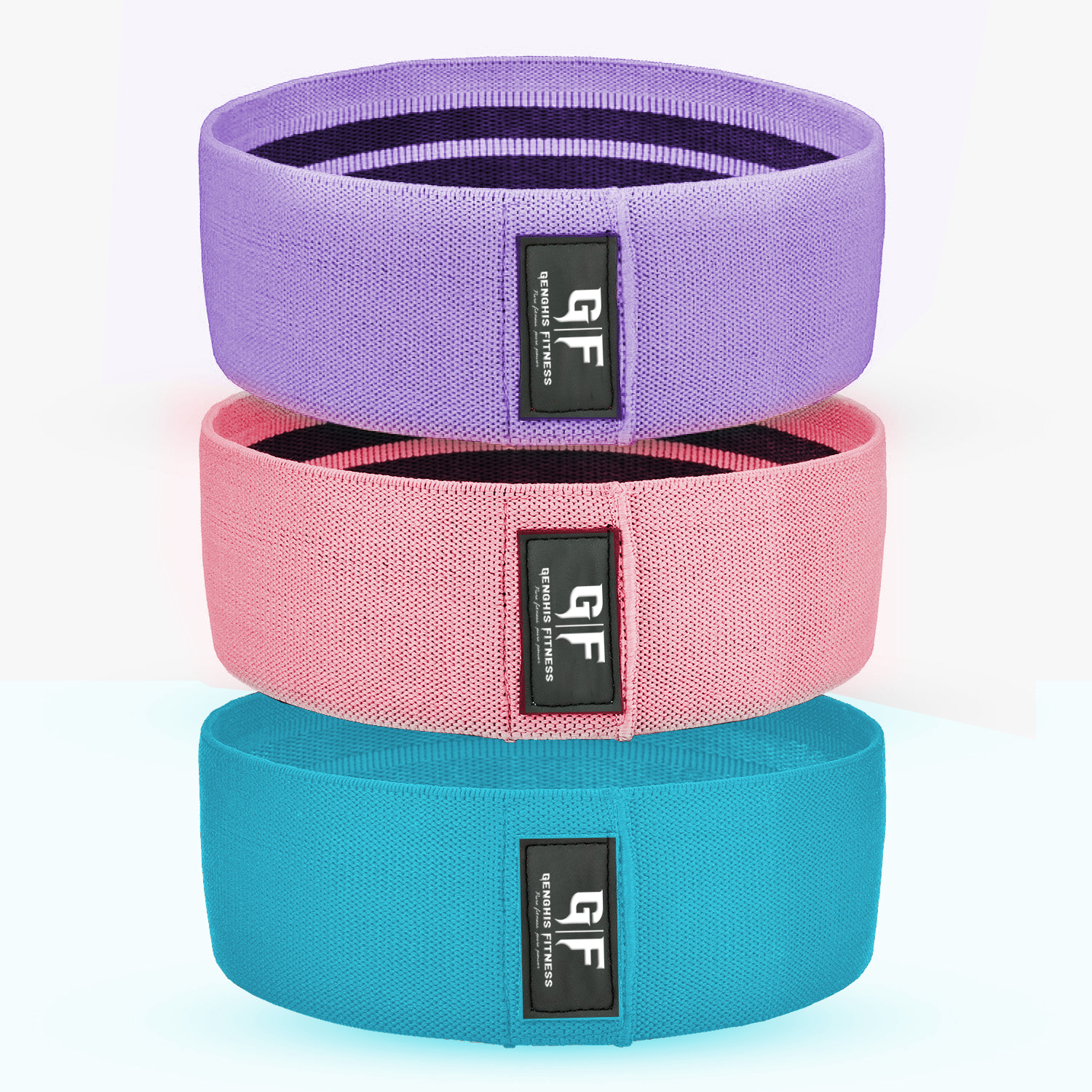
Hip circle bands work best integrated into a broader training setup. Understanding which accessories complement band work, and which serve functions bands cannot fill, helps build a complete toolkit without purchasing equipment that duplicates what you already own. This guide covers the accessories that pair most naturally with hip circle band training, organized by training function, with practical guidance on combining each with your band sessions.
Ankle Straps for Cable Machine
The most direct complement to hip circle band work. Bands provide accommodating resistance with a loading ceiling set by the heaviest band in your set. As hip abductor and glute strength increases beyond what band resistance can challenge, cable machines with ankle straps provide adjustable constant resistance that scales to match advanced strength levels.
Cable kickbacks, cable hip abduction, cable hip flexion, and cable leg curls performed with the ankle straps for cable machine cover the same movement patterns as band exercises but with a loading range that progresses indefinitely. Use bands for activation and when cable machine access is unavailable, and add cable ankle strap work as the primary loaded isolation tool when the heaviest available band no longer challenges the target muscles.
The transition typically happens after 8 to 12 weeks of consistent band training for athletes with no prior hip abductor training history. By that point, the gluteus medius has developed enough strength to require cable loading to continue adapting.
Knee Sleeves
Hip circle band activation before barbell squatting is most effective when the knee joint also receives support during the loaded squatting phase that follows. Bands prime the gluteus medius and hip external rotators. Knee sleeves maintain joint temperature and provide proprioceptive compression through the heavy working sets.
The knee sleeves stay on for the loaded compound movements after the bands are set aside. Together they address the two most important knee health factors in squat training: hip abductor activation quality before the session and joint thermal support during the heavy work. No single product covers both needs simultaneously.
Lifting Belt
Heavy barbell squats following hip circle band activation require lumbar bracing that no band provides. A lifting belt amplifies intra-abdominal pressure during the working sets where spinal loading is highest. The powerlifting leather belt is the right choice for powerlifting-style squatting and deadlifting at heavy loads. The nylon lifting belt suits athletes who train mixed modalities in the same session and need faster adjustment between barbell exercises and other movements.
The complete session sequence becomes: bands activate the hip abductors, knee sleeves support the joint, lifting belt braces the spine. Each piece of equipment fills one specific role in the session without overlapping with the others.
Lifting Straps
Lower body sessions combining heavy Romanian deadlifts with band activation work often reach a point where grip endurance caps the pulling volume before the glutes and hamstrings are fully taxed. The lifting straps extend set quality on heavy pulls, allowing the posterior chain to be trained to its actual strength capacity independent of forearm endurance. Use straps for working sets at 80 percent of training max and above.
Wrist Wraps
Athletes who include heavy pressing movements in the same session as lower body band work benefit from wrist wraps for the pressing portion. The wrist wraps stabilize the wrist joint during barbell bench press and overhead press and reduce the cumulative joint stress that develops across high-volume pressing sessions. They address the wrist joint the same way knee sleeves address the knee.
Full Resistance Band Set
Hip circle bands work best as part of a multi-resistance set rather than a single band at one resistance level. Having access to light, medium, heavy, and extra-heavy options in the same session allows proper resistance matching for each exercise and each training phase. Lighter bands suit dynamic warm-up movements where the band needs to move smoothly with the body. Heavier bands suit stationary exercises like hip thrusts where the primary muscles are near maximum force output.
The hip circle bands are available in multiple resistance levels. A complete set eliminates the common situation where the heaviest band is insufficient for hip thrusts but still appropriate for lateral walk warm-ups. Both applications require different resistances within the same training session.
Exercise Mat
Floor exercises including clamshells, glute bridges, donkey kicks, and fire hydrants require a comfortable non-slip surface. A quality exercise mat protects the knees and hips during ground-based exercises and provides sufficient traction for lateral band walks on smooth floors. Without adequate traction, lateral walking on slippery surfaces shifts effort toward balance maintenance rather than hip abduction, reducing the effectiveness of the exercise and the quality of the training stimulus.
Foam Roller
Post-training foam rolling of the hip flexors, IT band, and glute complex addresses tissue quality that bands and cable exercises do not cover. Tight hip flexors limit the range of motion in hip extension exercises. A stiff IT band restricts the lateral hip mobility needed for full-range lateral band walks. Regular foam rolling as part of a post-session cool-down maintains the tissue extensibility that allows band exercises to be performed through their full intended range of motion without compensatory patterns developing.
Training Log
Consistent progressive band training requires knowing what was done in previous sessions. A training log recording the date, exercises performed, resistance level used, and sets and reps completed provides the data needed to make informed progression decisions. Without this record, it is impossible to identify when to increase resistance, when a plateau requires a program adjustment, or whether training is producing the expected rate of progress.
Keep the log simple: date, exercise name, band resistance level, sets, reps. Review it weekly and apply progressive overload systematically. Bands treated with the same programming discipline as barbell work produce comparable quality of results over time. The training log is the mechanism that enforces that discipline across sessions.
How These Accessories Work Together
A complete lower body session integrating all of these accessories might follow this sequence: foam roll the hip flexors and IT band for 5 minutes, then hip circle band lateral walks and clamshells for hip abductor activation, then loaded barbell squats with knee sleeves and lifting belt for the primary strength work, then Romanian deadlifts with lifting straps for posterior chain volume, then cable ankle strap kickbacks and hip abduction as isolation finishers, then foam rolling again to close the session. Each accessory addresses one specific training need. None of them duplicate the function of any other.