Booty Band Safety Tips: How to Train Without Injury
Hip circle band training is among the safest forms of resistance training available. The loads are relatively low, the movement patterns are controlled, and the risk of acute injury from a band exercise is minimal compared to heavy barbell work. That said, a small number of technique errors and programming mistakes can cause overuse problems, skin irritation, or the development of compensation patterns that cause issues down the line.
This guide covers the safety considerations specific to hip circle band training, how to avoid the most common problems, and how to train in a way that keeps the exercises both effective and comfortable across months of consistent use.
Position the Band Correctly Every Session
Incorrect band placement is the most common source of discomfort in band training. The standard position for most hip circle exercises is just above the kneecap on the lower thigh, approximately 2 to 3 inches above the top of the knee. At this position, the band sits on the muscular bulk of the lower thigh and distributes its pressure across a comfortable contact area.
Placing the band directly on the knee joint or over the bony region just below the kneecap concentrates pressure on bony prominences and soft tissue that are sensitive to sustained compression. This causes discomfort and can create soreness in the tissue around the joint that is unrelated to the training effect of the exercise.
Check the band position before every set. Bands migrate during dynamic exercises and a band that started in the correct position can shift downward toward the knee during a lateral walk or clamshell set. Reposition between sets if necessary.
Choose the Right Resistance for the Exercise
Using a resistance level that is too heavy for the target muscles is the primary cause of compensation patterns in band training. When the band resistance exceeds the hip abductors’ ability to maintain proper alignment, the body compensates by recruiting other muscles, typically the lower back, adductors, and quadriceps, to assist the movement.
In the lateral band walk, compensation shows as the torso leaning toward the direction of travel with each step, which shifts load onto the lateral trunk rather than the hip abductors. In clamshells, compensation shows as the pelvis rolling backward as the knee rises, which uses lumbar rotation rather than hip external rotation to achieve the range. These compensations reduce the effectiveness of the exercise and can cause lower back fatigue or soreness from unintended loading.
If compensation patterns appear during a set, reduce the resistance band. The exercise should be challenging for the target muscles, not for the muscles that should not be involved. Correct resistance selection is a more important safety variable than any specific technique cue.
Warm Up Before Band Training
Hip circle bands are often used as the warm-up for lower body training, which creates the impression that no preparation is needed before starting band exercises. In most contexts this is correct. However, for athletes who train early in the morning, train in cold environments, or who have reduced hip mobility from prolonged sitting, a brief 2 to 3 minute general warm-up before band exercises is worthwhile.
Joint circles for the hips, a brief walk, or 5 minutes of light cycling prepares the hip joint connective tissue for the dynamic rotational movements of clamshells and fire hydrants. Cold joint capsule tissue has reduced extensibility, which can cause a pinching sensation at the front of the hip during movements that require full external rotation range.
Respect Muscle Soreness and Recovery
The gluteus medius and hip external rotators respond quickly to new training stimulus. Beginners often experience significant soreness in the outer hip after the first two to three sessions. Training through soreness that has not fully resolved adds load to tissue that is still in the repair process, which can extend recovery time and reduce the quality of the next session.
Allow at least 48 hours between sessions targeting the same muscles when significant soreness is present. For beginners in the first two weeks, three sessions per week with at least one rest day between each is a safe frequency that allows adequate recovery. As the muscles adapt and soreness becomes less pronounced, training frequency can increase to five sessions per week without recovery concerns.
Avoid Training Through Joint Pain
Muscle soreness in the outer hip, glutes, and inner thigh is the expected training response to band exercises. Joint pain, which produces a sharper or more localized sensation at the knee or hip joint itself, is a different signal that requires different management.
If you experience pain at the knee joint during banded squats or lateral walks, reduce the resistance and check the band position. If pain persists at reduced resistance or with correct band placement, stop the exercise and allow the joint to recover before returning. Persistent joint pain during band exercises that does not resolve with reduced resistance or rest warrants evaluation by a sports medicine physician or physical therapist.
Manage Skin Contact Carefully
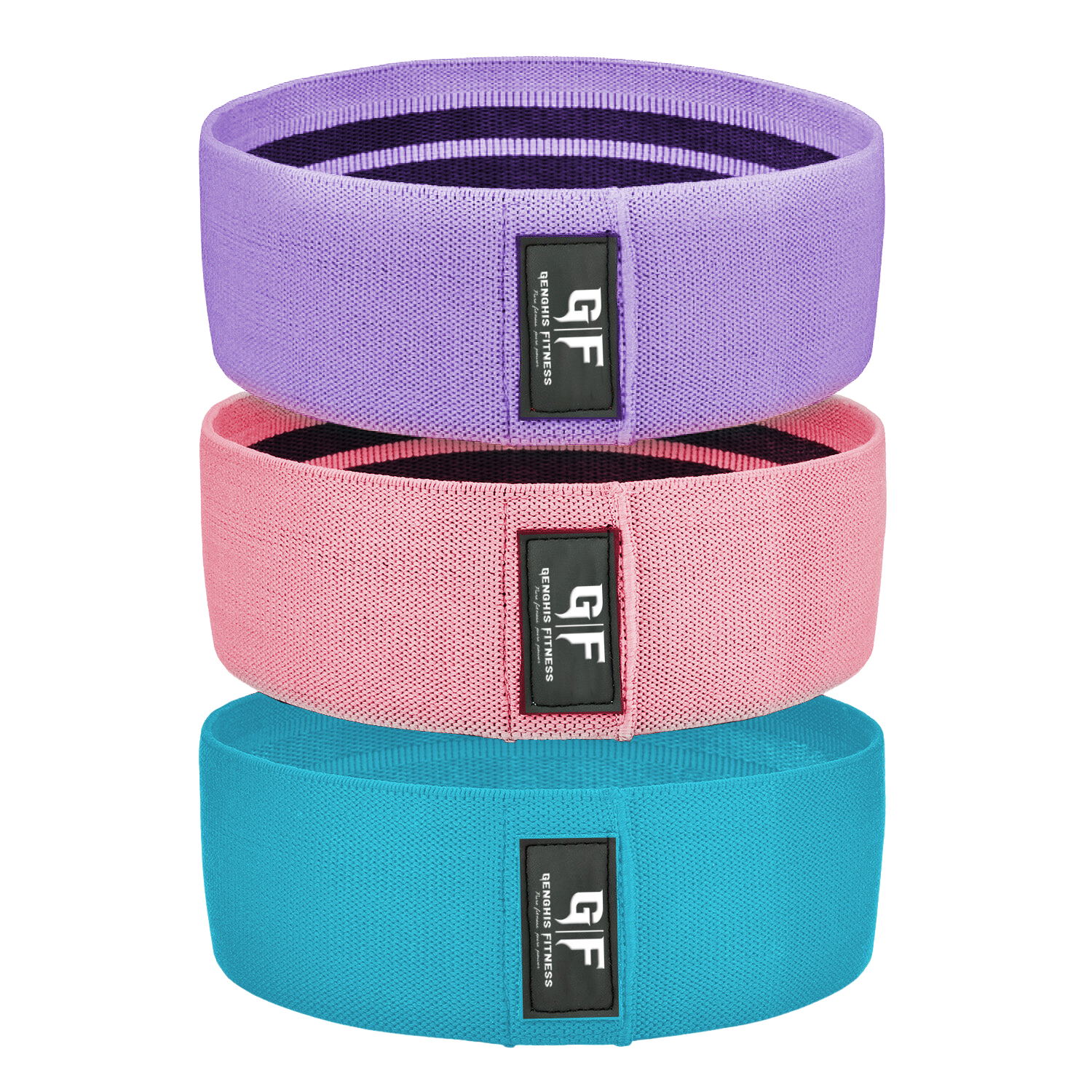
Latex loop bands placed directly on bare skin during high-rep sets can cause friction irritation from the combination of band movement against the skin and sweat. Fabric hip circle bands are significantly more comfortable for direct skin contact, but even fabric bands can cause mild irritation during very long sets or during multiple sessions per day.
Wearing shorts or compression tights during band exercises keeps the band against clothing rather than skin for most of the contact area, which virtually eliminates friction irritation. If training in shorts where the band contacts bare skin, fabric bands like the hip circle bands are the better choice compared to latex for comfort during extended sets.
Inspect Bands for Wear Before Heavy Use
Resistance bands degrade with use. Latex bands develop small tears and cracks in the material over time. Fabric bands can fray at the edges and develop thinning at the highest-stress stretch points. A band that snaps under tension during a heavy hip thrust or lateral walk can cause a sudden unloaded movement that is startling and can cause a balance-related injury in some circumstances.
Inspect bands before each session during which they will be used for maximum-resistance exercises. Check latex bands for surface cracks and white stress marks that indicate structural fatigue. Check fabric bands for edge fraying that exposes the internal elastic strands. Replace any band that shows these signs before continuing heavy training use.
Progress Resistance Gradually
Moving from a light band directly to the heaviest available band without intermediate steps is a progression error that increases injury risk. The connective tissue and tendons supporting the hip abductors adapt more slowly than the muscle fibers themselves. Resistance progressions that outpace connective tissue adaptation increase the risk of tendinopathy at the hip abductor attachment sites on the greater trochanter.
A practical progression rule: spend at least 2 to 4 weeks at each resistance level before moving to the next. When the current resistance no longer challenges the target muscles adequately, move up. Do not skip resistance levels to accelerate progress. Systematic progression through available resistance levels is safer and ultimately produces better results than rushed increases.